


Polyisobutylene (PIB) is used to manufacture detergent and dispersant components for gasoline and diesel additives. It is not a finished fuel additive by itself. Through chemical modification, PIB can be converted into products such as polyisobutylene succinic anhydride (PIBSA), polyisobutylene succinimide (PIBSI), and polyisobutylene amine (PIBA).
For fuel additive manufacturers, PIB grade selection matters. Molecular weight, terminal vinylidene content, and viscosity all affect the raw material's suitability for further processing.
Explore Industrial Grade Polyisobutylene Products
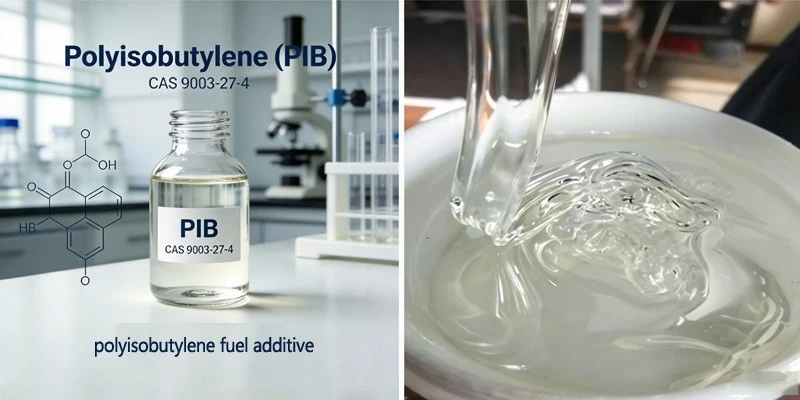
What Is Polyisobutylene Used for in Fuel Additives?
PIB provides the hydrocarbon backbone for several fuel additive components. Its polymer chain is modified to introduce functional groups that help control deposits and disperse contaminants in fuel systems.
One commonly used raw material is high-reactivity polyisobutylene (HR-PIB). Compared with conventional PIB, HR-PIB has a higher proportion of reactive terminal vinylidene groups, making it suitable for certain chemical modification processes.
The final application depends on the derivative produced, not simply on the use of PIB as a raw material.
Find PIB Grades for Fuel Additive Production
How Is PIB Converted into Fuel Additive Components?
PIB is commonly used as the starting material for producing PIBSA and its downstream derivatives.
The production process generally involves two stages:
- PIB to PIBSA: PIB reacts with maleic anhydride to form polyisobutylene succinic anhydride.
- PIBSA to PIBSI: PIBSA reacts with suitable polyamines to produce polyisobutylene succinimide.
PIBSA can also be used to manufacture other functional derivatives. The reaction conditions and raw material specifications depend on the intended product.
Check PIB 1000–1300 Specifications for Additive Manufacturing
What Is the Difference Between PIBA, PIBSA and PIBSI?
| Material | Full Name | Main Role |
|---|---|---|
| PIBA | Polyisobutylene Amine | Amine-functionalized PIB derivative |
| PIBSA | Polyisobutylene Succinic Anhydride | Intermediate for further modification |
| PIBSI | Polyisobutylene Succinimide | Ashless detergent and dispersant component |
Polyetheramine (PEA) is another type of detergent component used in some gasoline additive formulations. It is not a PIB derivative, but it can be combined with PIB-based components in suitable formulations.
How Do PIB-Based Fuel Additives Work?
PIB-based derivatives contain both a hydrocarbon segment and functional groups. The hydrocarbon portion helps the molecule remain compatible with the fuel, while the functional portion interacts with deposit-forming materials.
Depending on the formulation, these additives can:
- Help prevent deposits from accumulating on fuel injectors and other engine components.
- Keep certain contaminants dispersed in the fuel.
- Support fuel system cleanliness during engine operation.
PIBSI is used as an ashless dispersant in fuel additive formulations. Its performance varies with molecular structure, concentration, fuel composition, and engine conditions. (Source: Chevron Oronite, PIB-Based Fuel Additives, 2024.)
What Are the Applications of PIB-Based Fuel Additives?
PIB-derived materials are used in both gasoline and diesel additive production. Their functions vary with the fuel system and formulation.
| Application | Typical Function |
|---|---|
| Gasoline additives | Fuel injector and intake system deposit control |
| Diesel additives | Soot dispersancy and internal injector deposit control |
| Ashless dispersant formulations | Helps keep contaminants suspended |
PIBSI is used in diesel additive formulations to help disperse soot and manage internal injector deposits. In gasoline formulations, PIB-derived components may be used alongside other detergent materials.
PIBSI and polyetheramine (PEA) can be combined in some gasoline packages. The two components have different chemical structures and functions, so formulators need to test their compatibility and performance in the finished product.
Which PIB Specifications Matter for Fuel Additive Production?
Not every PIB grade is suitable for fuel additive synthesis. Buyers should check the raw material specifications against the requirements of their production process.
| Specification | What Buyers Should Check |
|---|---|
| Number-average molecular weight (Mn) | Whether the molecular weight fits the target synthesis route |
| Terminal vinylidene content | Proportion of reactive terminal groups |
| Viscosity | Handling and processing requirements |
| Moisture content | Water level in the supplied material |
| Volatile content | Residual volatile components |
| Molecular weight distribution | Consistency of polymer composition |
For certain PIBSA production routes, HR-PIB with an Mn of approximately 950–1300 is commonly considered. High terminal vinylidene content is also desirable for these processes. The exact limits should be confirmed against the manufacturer's process requirements and the supplier's technical data.
Compare PIB Molecular Weight and Technical Specifications
What Documents Should Buyers Request?
Before placing a bulk order, buyers should review the following documents:
- TDS: Product specifications and typical properties.
- COA: Actual test results for the supplied batch.
- SDS: Handling, storage, and safety information.
- Sample: Material for laboratory testing and synthesis evaluation.
How Should Buyers Select and Store PIB?
When purchasing PIB for fuel additive production, buyers should start with the intended downstream product. A grade used for PIBSA synthesis may not meet the requirements of another process.
Before confirming an order, check:
- The target derivative, such as PIBSA or PIBSI.
- Required Mn and terminal vinylidene content.
- Viscosity and other process-related specifications.
- Batch consistency based on the COA.
- Sample test results before bulk purchasing.
PIB should be kept in sealed packaging and stored according to the supplier's SDS and TDS. Buyers should also confirm the recommended storage temperature and shelf life for the specific grade.
Request a PIB 2400 Quote and Product Details
FAQ
1. Is polyisobutylene a fuel additive?
No. PIB is a synthetic polymer used as a raw material in fuel additive production. It is chemically modified to produce functional components such as PIBSA, PIBSI, and PIBA, which are used in detergent and dispersant formulations.
2. What is the difference between PIB and PIBSI?
PIB is the starting polymer, while PIBSI is a chemically modified derivative made through the reaction of PIBSA with suitable polyamines. PIBSI has functional groups that make it useful as a detergent and dispersant component.
3. Is PIB used in diesel fuel additives?
Yes. PIB-derived materials, particularly PIBSI, are used in some diesel additive formulations. Their role includes soot dispersancy and internal injector deposit control. The selected grade depends on the formulation and fuel system.
4. Why is HR-PIB used in fuel additive production?
HR-PIB has a higher proportion of reactive terminal vinylidene groups than conventional PIB. These groups make it suitable for chemical modification, including the production of PIBSA.
5. What molecular weight of PIB is used for fuel additive production?
The required molecular weight depends on the synthesis process. An Mn range of approximately 950–1300 is used for certain HR-PIB applications in PIBSA production. Buyers should confirm the exact specification with their manufacturer.
6. What should buyers check when purchasing PIB?
Buyers should review Mn, terminal vinylidene content, viscosity, moisture, volatile content, and molecular weight distribution. TDS, COA, and SDS documents should also be checked before sample testing and bulk purchasing.
Conclusion
PIB is a raw material for producing fuel additive components such as PIBSA, PIBSI, and PIBA. These derivatives are used in gasoline and diesel formulations for deposit control and dispersancy. When sourcing PIB, manufacturers should focus on molecular weight, terminal vinylidene content, viscosity, and batch quality rather than relying on the product name alone.