


Polyisobutylene (PIB) is used in lubricant formulations to increase viscosity, improve film formation, and modify the performance of finished oils. However, a PIB grade that blends well with one base oil may produce haze, gel particles, or poor low-temperature stability in another formulation.
For lubricant manufacturers, the important question is not simply whether PIB dissolves in oil. The choice of base oil, PIB molecular weight, addition rate, and blending conditions all affect the result. This guide covers the compatibility of PIB with common lubricant base stocks, practical blending methods, and the quality checks worth making before production.
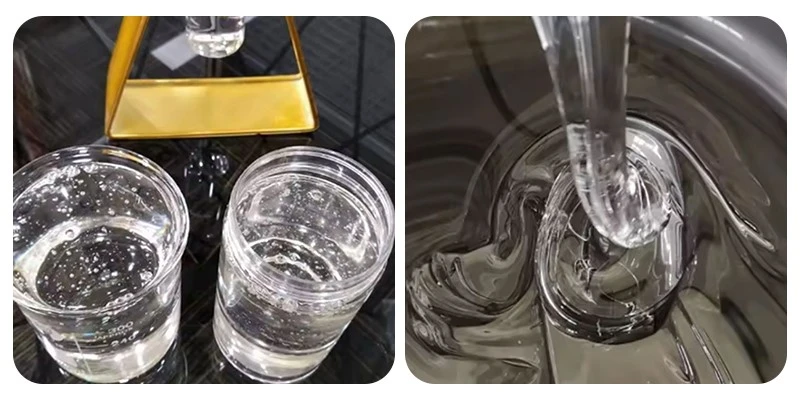
1. Is Polyisobutylene Soluble in Lubricant Base Oils?
Polyisobutylene is generally compatible with mineral oils and polyalphaolefin (PAO) base oils. Selected synthetic ester base stocks can also be used with PIB, although compatibility depends on the ester chemistry and the PIB grade. PAG base oils require more careful evaluation because their compositions and oil compatibility vary.
| Base oil | PIB compatibility | Formulation notes |
|---|---|---|
| Group I mineral oil | Generally good | Commonly used in conventional lubricant formulations |
| Group II mineral oil | Generally good | Check the selected grade and final concentration |
| Group III mineral oil | Grade-dependent | Test clarity and low-temperature stability |
| PAO | Generally good | High-molecular-weight PIB may need closer evaluation at low temperatures |
| Synthetic ester | Often compatible | Confirm compatibility with the specific ester |
| PAG | Requires testing | Do not assume compatibility across all PAG types |
| Water and alcohol | Insoluble | Not suitable as PIB carrier media |
A clear blend at room temperature does not necessarily mean the formulation will remain stable during storage. Manufacturers should check the mixture at its intended storage and operating temperatures, especially when using high-molecular-weight PIB. For more information, see our guide to polyisobutylene solubility.
2. Why Does PIB Dissolve in Oil?
PIB dissolves in many hydrocarbon oils because their molecular characteristics are similar. Its polymer backbone consists mainly of nonpolar hydrocarbon groups, including repeating –CH₂–C(CH₃)₂– units.
Mineral oils and PAO are also predominantly hydrocarbon-based. This chemical similarity helps the oil interact with the PIB chains, allowing the polymer to disperse and dissolve in a suitable formulation.
This is an example of the principle that materials with similar chemical characteristics tend to be more compatible. It also explains why PIB does not dissolve in water or alcohol under normal blending conditions.
However, chemical similarity alone does not guarantee a stable finished lubricant. Molecular weight, concentration, temperature, and the composition of the base oil still influence the final result.
3. How Do Molecular Weight and Treat Rate Affect PIB Solubility?
Molecular weight affects both the handling of PIB and its behavior during blending. Lower-molecular-weight grades are usually easier to pump and incorporate into oil. Higher-molecular-weight grades can provide stronger thickening effects, but they are more difficult to handle and may require longer blending. Manufacturers can also review the characteristics of low molecular weight polyisobutylene for lubricant applications when comparing suitable grades.
The following are practical selection considerations rather than universal grade specifications:
- Lower-molecular-weight PIB: Often selected when easier handling and blending are important.
- Medium-molecular-weight PIB: Used in formulations that need a balance between viscosity contribution and processability.
- Higher-molecular-weight PIB: Can provide stronger viscosity modification, but requires attention to mixing, low-temperature behavior, and finished-oil viscosity.
The amount of PIB added should be determined by the target viscosity and performance of the finished lubricant. A fixed treat rate cannot be applied to every formulation. Even when two manufacturers use the same PIB grade, differences in base oil and other additives can lead to different results.
If a new batch behaves differently from a previous one, check its molecular-weight data and viscosity alongside the base oil and blending conditions. Differences in molecular-weight distribution or volatile content may also affect processing. The supplier's COA is a useful starting point, but it cannot replace a formulation compatibility test.
4. How to Dissolve PIB in Lubricant Base Oil
Poor blending is a common reason for undissolved particles and uneven viscosity. Adding a large amount of PIB to cold base oil in one step can make incorporation difficult, particularly when the polymer has a high molecular weight.
A more controlled process is:
- Prepare the base oil. Heat it to a suitable processing temperature according to the PIB supplier's recommendations and the equipment's operating limits.
- Add PIB gradually. Feed the polymer in small portions while maintaining effective agitation. Avoid adding the entire quantity at once.
- Allow sufficient mixing. Continue blending until the mixture is uniform and no visible polymer pieces remain.
- Prepare a concentrate if needed. For larger production batches, dissolving PIB in part of the base oil first can make subsequent dilution easier.
- Check the finished blend. Inspect its appearance and viscosity after cooling. Filtration may remove foreign particles, but it should not be used to conceal incomplete dissolution.
The required temperature and mixing time depend on the PIB grade, base oil viscosity, batch size, and equipment. Follow the supplier's technical guidance and verify the process with a small trial before scaling up.
Also distinguish between pure PIB and PIB-based additive concentrates. A product sold under a designation such as T603 should not automatically be treated as equivalent to pure PIB 1300. Its active polymer content and carrier oil depend on the supplier's formulation. Check the TDS and COA before calculating the addition amount.
5. Troubleshooting Common PIB Blending Problems
When a PIB blend does not look or perform as expected, check the base oil and blending process before changing the formulation.
| Problem | Possible cause | What to check |
|---|---|---|
| Hazy appearance | Incomplete dissolution or limited compatibility | Base oil type, temperature, and mixing time |
| Gel particles | Polymer added too quickly or insufficient mixing | Addition rate and agitation |
| Sediment | Contamination or undissolved material | Raw material cleanliness and filtration |
| Cloudiness after storage | Low-temperature incompatibility or formulation instability | Storage temperature and PIB grade |
| Uneven viscosity | Incomplete blending or inconsistent raw materials | Mixing procedure and batch COA |
A blend that looks clear while hot may become cloudy after cooling. For this reason, appearance checks should include the temperature conditions expected during transport and storage.
Before changing the PIB concentration, run a small compatibility test using the actual base oil and the same blending sequence planned for production.
6. What Is the Difference Between PIB, PIBSA, and PIBSI?
These three materials are related, but they serve different functions in lubricant manufacturing. PIB is also used in a range of lubricant additive applications.
- PIB (Polyisobutylene): A hydrocarbon polymer used for viscosity modification and other formulation purposes.
- PIBSA (Polyisobutenyl Succinic Anhydride): A reaction product made by introducing succinic anhydride functionality into PIB. It is an intermediate for producing lubricant additives.
- PIBSI (Polyisobutenyl Succinimide): Produced by further reacting PIBSA with an amine. It is widely used as a dispersant in lubricant formulations.
The production route is commonly described as PIB → PIBSA → PIBSI. Although they share a chemical starting material, PIB, PIBSA, and PIBSI are not interchangeable products. Buyers should identify the required material by its intended function rather than treating the names as different grades of the same additive.
7. What Should Manufacturers Check When Selecting a PIB Grade?
Start with the base oil used in the formulation. Then select a PIB grade based on the required viscosity contribution, processing conditions, and low-temperature performance.
Before placing a bulk order, review the supplier's technical data and COA. Useful items include:
- Molecular weight or the supplier's stated molecular-weight range
- Kinematic viscosity at 100°C, where provided
- Flash point
- Volatile content
- Ash content
- Appearance and water content, where specified
Do not rely on the COA alone to predict finished-oil performance. Test the selected PIB grade in the actual base oil, using the intended concentration and blending process. Check the finished blend for appearance, viscosity, and stability after cooling and storage.
For lubricant manufacturers, this small-scale test is often more useful than choosing a grade based on molecular weight alone. Explore our industrial-grade polyisobutylene for product specifications and available grades.
Frequently Asked Questions
Is PIB soluble in every lubricant base oil?
No. PIB is generally compatible with mineral oils and PAO, while selected synthetic esters may also work. PAG compatibility depends on the specific chemistry and must be tested.
Why does high-molecular-weight PIB become cloudy during storage?
Low-temperature conditions, base oil compatibility, and polymer concentration can all contribute to cloudiness. Test the blend under the expected storage conditions before production.
What is the correct PIB treat rate for lubricant formulations?
There is no single treat rate for all lubricants. The required amount depends on the target viscosity, PIB grade, base oil, and other additives in the formulation.
Is PIB 1300 the same as T603?
Not necessarily. PIB 1300 identifies a PIB grade, while T603 is used as an additive designation in the lubricant market. Product composition and active polymer content should be confirmed through the supplier's TDS and COA.
Can a PIB COA guarantee compatibility with my base oil?
No. A COA describes the tested properties of the supplied material. Compatibility with a specific base oil and finished formulation still needs to be confirmed through blending and storage tests.