


Polyisobutylene (PIB) is a synthetic hydrocarbon polymer used in adhesive and sealant manufacturing. Produced by polymerizing isobutylene, it is valued for its permanent tack, flexibility, low moisture permeability and resistance to aging. Depending on its molecular weight, PIB ranges from a viscous liquid to a rubber-like solid.
For adhesive and sealant manufacturers, PIB can serve as a base polymer, tackifier, plasticizer or formulation modifier. Common applications include pressure-sensitive adhesives, hot melt adhesives, insulating glass sealants and non-drying sealing compounds. Its molecular weight and viscosity affect formulation behavior, making grade selection an important part of raw material purchasing.
Polyisobutylene is widely used in adhesive and sealant formulations. Explore our PIB products for industrial applications.
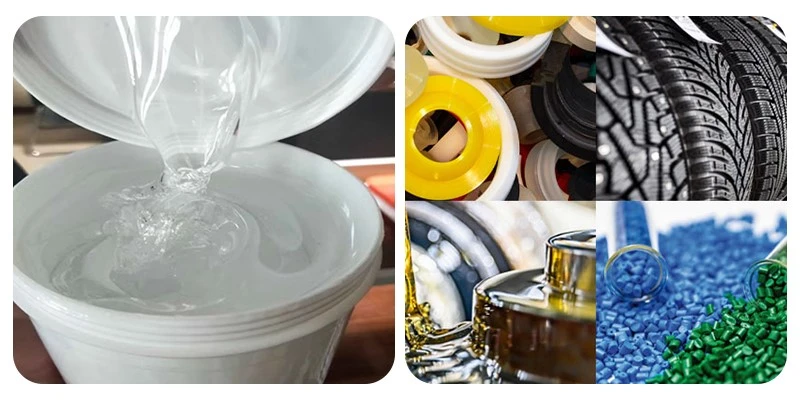
What Are the Main Properties of Polyisobutylene?
Polyisobutylene is an amorphous, saturated polymer with the repeating unit (C₄H₈)ₙ and CAS number 9003-27-4.
Its main characteristics make it suitable for formulations that require persistent tack, flexibility and moisture resistance.
| Property | Description |
|---|---|
| Chemical name | Polyisobutylene (PIB) |
| Alternative name | Polyisobutene |
| CAS number | 9003-27-4 |
| Molecular formula | (C₄H₈)ₙ |
| Polymer structure | Saturated hydrocarbon |
| Appearance | Viscous liquid to rubber-like solid |
| Glass transition temperature | Approximately −62°C |
| Solubility | Many hydrocarbon solvents and mineral oils |
PIB has several characteristics relevant to adhesive and sealant production:
- Permanent tack: Helps adhesives maintain contact with surfaces over time.
- Low moisture permeability: Makes PIB suitable for moisture-barrier applications, particularly insulating glass primary seals.
- Flexibility: Supports applications requiring soft, flexible adhesive or sealing materials.
- Aging resistance: Its saturated polymer structure provides better aging resistance than natural rubber in many applications, although oxidation can still occur.
PIB does not undergo conventional sulfur or peroxide vulcanization. Its cohesive strength and final performance depend on molecular weight and the other components in the formulation.
What Is Polyisobutylene Used for in Adhesives?
PIB is used in several adhesive systems where tack, flexibility and long-term adhesion are required.
1. Pressure-Sensitive Adhesives (PSAs)
PIB is used in pressure-sensitive adhesives for labels, tapes, sealing products and protective materials.
Low-molecular-weight PIB contributes tack and flexibility, while higher-molecular-weight grades help improve cohesive strength. Manufacturers may also combine PIB with tackifying resins and plasticizers to adjust adhesion and viscosity.
The balance between tack and cohesion determines whether the adhesive can maintain its bond without excessive flow or residue.
2. Hot Melt Adhesives
PIB can be incorporated into hot melt adhesive formulations to improve tack, flexibility and adhesion to selected substrates, including certain polyolefin films.
Molecular weight affects melt viscosity and processing behavior. A grade with higher viscosity may require different mixing and application conditions. Antioxidants may also be used to help control oxidation during heating.
3. Removable and Cold-Seal Adhesives
PIB's persistent tack makes it useful in removable pressure-sensitive adhesives and cold-seal formulations.
In removable adhesives, the formulation needs to maintain sufficient adhesion while allowing clean removal. In cold-seal applications, PIB helps coated surfaces bond to each other under pressure without conventional heat activation.
What Are the Applications of PIB in Sealants?
PIB is used as a base polymer in selected non-curing sealants and as a modifier in other sealing formulations. Its flexibility and low moisture permeability are particularly useful in applications requiring a lasting, non-hardening seal.
1. Insulating Glass Sealants
One important application of PIB is in insulating glass (IG) edge-seal systems.
PIB serves as the primary seal, limiting moisture and gas transmission into the sealed space. A secondary seal, commonly based on polysulfide, polyurethane or silicone, provides additional mechanical strength.
The two layers perform different functions:
| Sealant | Main function |
|---|---|
| PIB primary seal | Limits moisture and gas transmission |
| Secondary seal | Provides mechanical strength and supports the edge-seal system |
PIB's barrier properties make it suitable for the primary sealing layer, but it should not be treated as a replacement for the complete dual-seal system.
2. Roofing and Window Sealants
PIB is also used in roofing compounds, window bedding materials and non-drying sealants.
It contributes flexibility and adhesion, while fillers such as calcium carbonate and clay can be added to adjust consistency and formulation cost. The proportions of polymer and filler influence the final compound's flow, tack and flexibility.
3. Wire and Cable Sealants
In wire and cable sealing compounds, PIB contributes electrical insulation, flexibility and moisture resistance.
It can be combined with fillers, oils and other polymers to obtain the required processing and sealing properties. The finished compound must be evaluated against the electrical and mechanical requirements of its intended application.
How Does PIB Molecular Weight Affect Formulation Performance?
Molecular weight is one of the main factors affecting PIB performance. Lower-molecular-weight grades generally provide greater flow and tack, while higher-molecular-weight grades contribute more to cohesive strength and resistance to deformation.
For adhesive manufacturers, combining different molecular-weight grades can help balance adhesion and cohesion. For example, a pressure-sensitive adhesive may use lower-molecular-weight PIB to maintain tack and a higher-molecular-weight component to improve holding performance.
Molecular weight should not be evaluated alone. Viscosity, compatibility with tackifying resins and plasticizers, and the intended processing temperature also influence grade selection.
When comparing suppliers, check whether molecular weight is reported as Mn, Mw or Mv. These measurements are different and should not be compared directly.
Medium molecular weight PIB is worth evaluating when selecting PIB for adhesive formulations.
What Should Manufacturers Check Before Purchasing PIB?
Selecting PIB for adhesive and sealant production requires more than checking the product name. Technical specifications and batch quality are important when evaluating a new supplier or changing raw material grades.
The following parameters deserve attention:
| Parameter | Why It Matters |
|---|---|
| Molecular weight | Influences tack, cohesion and polymer behavior |
| Viscosity | Affects mixing, pumping and application |
| Appearance and color | Relevant to material consistency and final product appearance |
| Water content | Important for moisture-sensitive formulations |
| Density | Useful for formulation and incoming inspection |
| Flash point | Relevant to storage, handling and process safety |
Before purchasing, request the current Technical Data Sheet (TDS), Safety Data Sheet (SDS) and a lot-specific Certificate of Analysis (COA).
The COA should identify the actual test results, specification limits and test methods. Manufacturers should also confirm that the reported viscosity and molecular weight measurements are suitable for their production requirements.
A laboratory sample is useful for checking compatibility, mixing behavior, tack and adhesion before placing a bulk order.
Frequently Asked Questions
What is polyisobutylene used for in adhesives?
PIB is used as a base polymer, tackifier, plasticizer and modifier in pressure-sensitive adhesives, hot melt adhesives, removable adhesives and cold-seal formulations.
Why is PIB used in sealants?
PIB provides flexibility, persistent tack and low moisture permeability. It is particularly useful as the primary seal in insulating glass units and in selected non-drying sealing compounds.
Can PIB be used in hot melt adhesives?
Yes. PIB can improve tack and flexibility in hot melt formulations. Its molecular weight affects melt viscosity, so the grade should be selected according to the processing requirements.
What should I check when buying PIB?
Check molecular weight, viscosity, appearance, color, water content and flash point. Request a current TDS, SDS and lot-specific COA before evaluating the material for production.
Polyisobutylene Supply for Industrial Manufacturers
The right PIB grade depends on the adhesive or sealant formulation, particularly its requirements for tack, cohesive strength, viscosity and flexibility.
Tianjin GNEE Biotech Co., Ltd. supplies industrial chemical raw materials, including polyisobutylene for industrial applications. Buyers evaluating PIB can contact Gnee Bio for product specifications, COA and sample information.